|
Each week our specialists publish a research paper about Art and its markets.
Antiques, painting, drawing, sculpture, furniture, fine art, porcelain, ceramic, work of art, carpet, tapestry, silver are among the subject studied.
You can receive our free weekly research paper by email by subscribing to our newsletter.
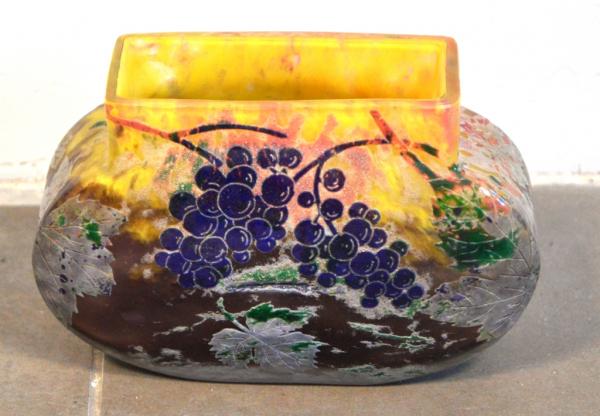 Sophie Himbaut auction house, in Orleans, in collaboration with our experts specialized in free valuation and free appraisal sold at auction a French Daum Nancy vase, Friday 19th March in Aix-en-Provence.
DAUM à NANCY » More
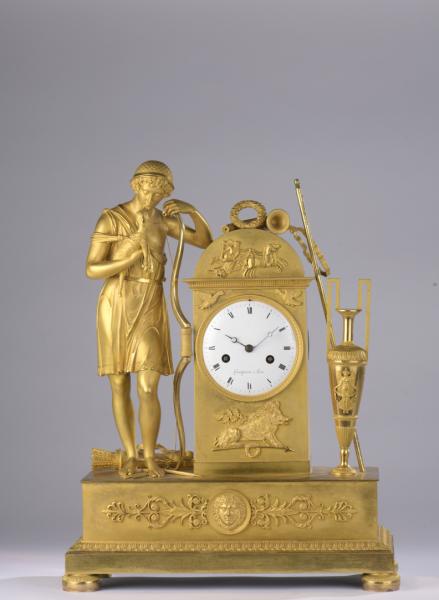 Philocale auction house, in Orleans, in collaboration with our experts specialized in free valuation and free appraisal sold at auction a French Empire period ormolu clock. Sunday 14th February in Orleans.
Jeune chasseur à l'antique tenant un jeune faon. » More
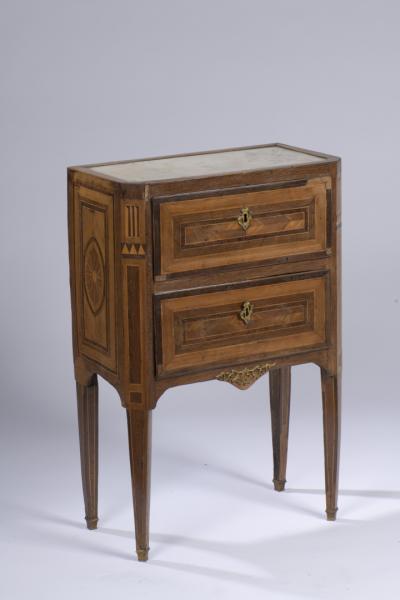 Philocale auction house, in Orleans, in collaboration with our experts specialized in free valuation and free appraisal sold at auction a late 18th century Italian marquetry commode, Sunday 14th February in Orleans.
Demi-commode rectangulaire à pans coupés en bois de placage marqueté de vélum, triglyphes et filets d'encadrements. Dessus en marbre encastré affleurant, pieds en gaine fuselée. » More

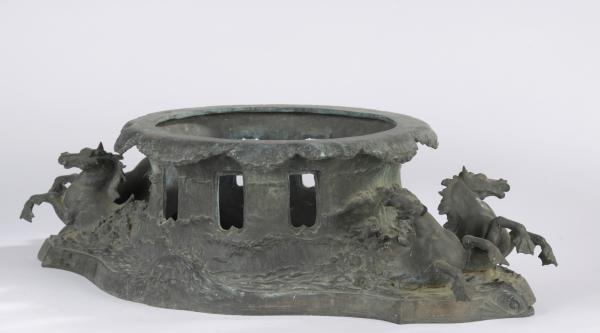 Philocale auction house, in Orleans, in collaboration with our experts specialized in free valuation and free appraisal sold at auction a French circa 1900 bronze fontain, Sunday 14th February in Orleans.
Support de fontaine ou surtout de table en bronze à tambour ajouré orné de concrétions, têtes de dauphin et mascarons de dieu marin, flanqué de chevaux marins surgissant des flots.
Circa 1890, inspiré par les chevaux marins créés par Gustave Debrie (1842-1932) pour la fontaine des Girondins à Bordeaux. » More
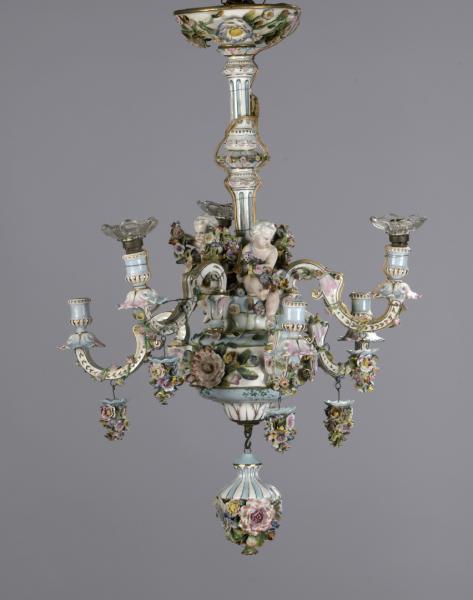 Philocale auction house, in Orleans, in collaboration with our experts specialized in free valuation and free appraisal sold at auction a 19th century German, probably Meissen, porcelain with putti six lights chandelier, Sunday 14th February in Orleans.
ALLEMAGNE, Meissen ?
Lustre en porcelaine polychrome à six bras de lumières sur deux couronnes, fût balustre en partie cannelé, décor de putti, semi de fleurs et guirlandes fleuries.
Fin du XIXe siècle » More
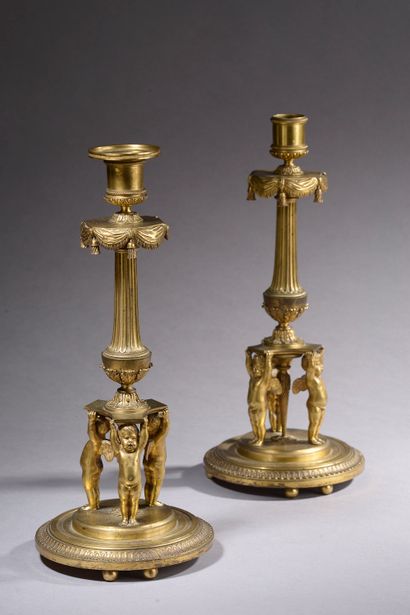 Guillaume Le Floc'h auctioneer in collaboration with our experts specialized in free valuation and free appraisal sold at auction a pair of French Louis 16 period ormolu candlesticks, the base supported by three putti, Thursday 11th March in Saint Cloud.
Paire de flambeaux en bronze doré, le fût à colonne balustre cannelée surmontée de drapés passementés. Il est soutenu par trois putti reposant sur une base circulaire ceint d'une frise de canaux (manque deux pompons sur chaque flambeau et une bobèche). » More
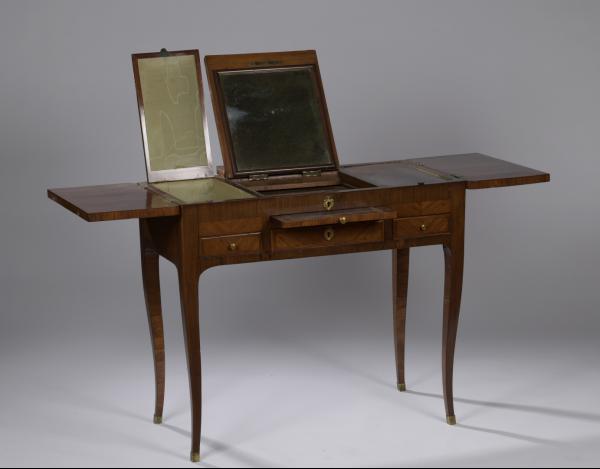 Philocale auction house, in Orleans, in collaboration with our experts specialized in free valuation and free appraisal sold at auction a French Louis XV period parquetry toilet table with a trace of stamp and the JME stamp, Sunday 14th February in Orleans.
Coiffeuse en placage toutes faces de bois de rose dans des encadrements d’amarante et filets de bois teinté, ouvrant par trois tiroirs et une tirette écritoire en façade, deux volets et un abattant foncé d’un miroir sur le plateau. Pieds cambrés » More
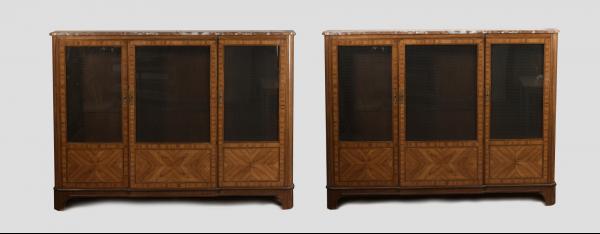 Philocale auction house, in Orleans, in collaboration with our experts specialized in free valuation and free appraisal sold at auction a pair of French Louis XVI style parquetry and marble top bookcases, Sunday 14th February in Orleans.
Paire de bibliothèques à hauteur d'appui, à léger ressaut central en placage de bois de rose en aile de papillon dans des encadrements d'amarante et filet de bois clair, montants antérieurs arrondis à cannelures simulées. Elle ouvre par trois vantaux grillagés et vitrés aux 2/3, plateau en marbre (un brisé).
Style Louis XVI » More
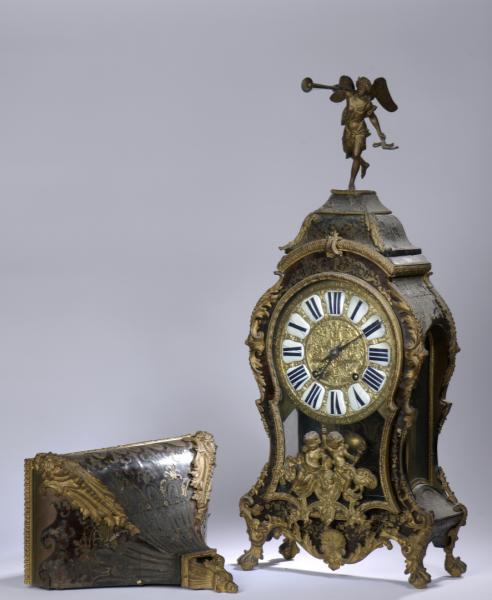 Philocale auction house, in Orleans, in collaboration with our experts specialized in free valuation and free appraisal sold at auction a French Regence period Boulle marquetry and ormolu wall clock and bracket, Sunday 14th February in Orleans.
Cartel d’applique de forme violonée et sa console en placage de corne brune marquetée de laiton à décor de rinceaux, le cadran circulaire à douze plaques d’émail blanc à chiffres romains en bleu. Riche ornementation de bronzes ciselés et dorés tels que renommée, chutes, agrafes, sabots et tablier. » More
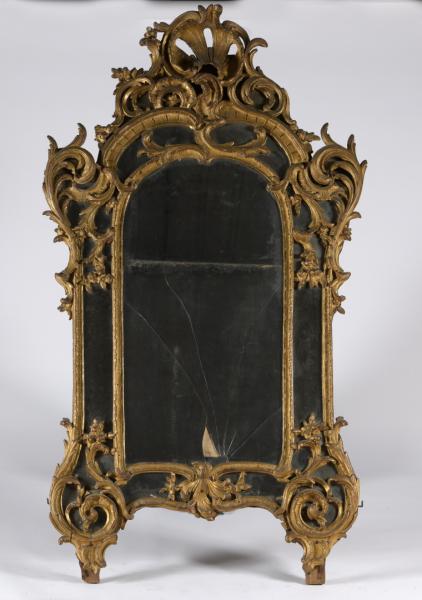 Philocale auction house, in Orleans, in collaboration with our experts specialized in free valuation and free appraisal sold at auction a French Louis XV period giltwood mirror with an impressive carving, Sunday 14th February in Orleans.
Miroir d’applique à parecloses et fronton chantourné en bois mouluré, sculpté et doré, à décor de coquilles, festons, feuilles d’acanthe et enroulements. » More
|


