|
Each week our specialists publish a research paper about Art and its markets.
Antiques, painting, drawing, sculpture, furniture, fine art, porcelain, ceramic, work of art, carpet, tapestry, silver are among the subject studied.
You can receive our free weekly research paper by email by subscribing to our newsletter.
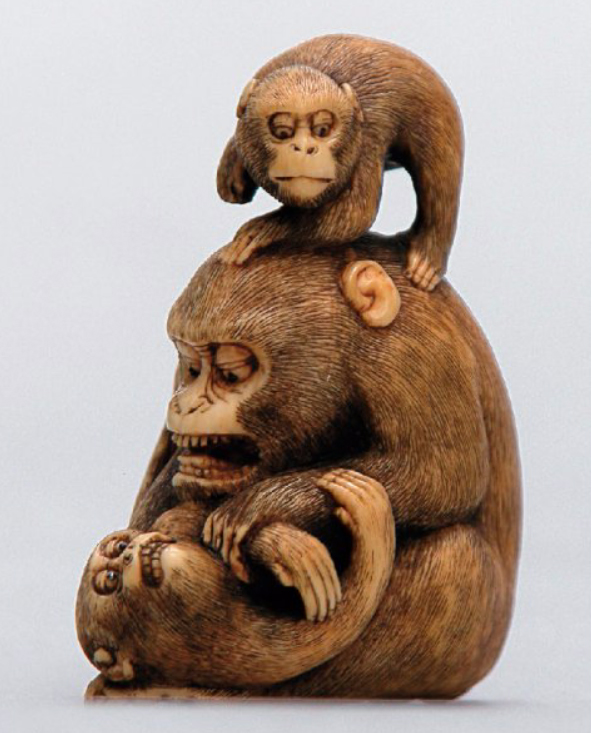 It's small, sometimes funny, scary or touching, it is collected and there are thousands of different. No, this is not the latest trendy toy for your children, but the netsuke, a small 100 years old Japanese sculpture with charm, popular in the auction house.
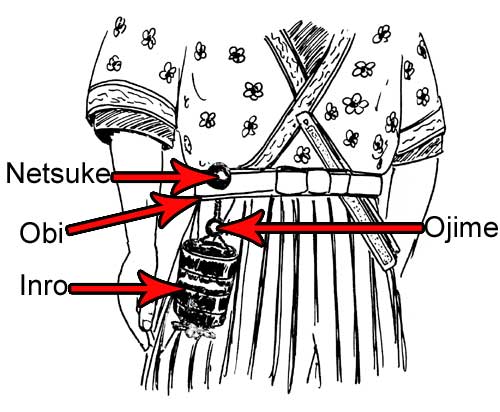
The traditional Japanese dress, the kimono has no pockets. To carry the common objects of everyday life, men used small bags or boxes attached to the belt by a cord. To block this string an object generalizes from the 17th century, the netsuke. The most popular form of this netsuke is a small sculpture carved on all sides, with two holes for passing the string.
The netsuke, of wood, ivory or porcelain, ceramic or shell, is going to become a preferred medium of the imaginary of Japanese artists. Deities, naturalistic or fantastic bestiary, expressive characters of everyday life or the theater, the topics are endless and will reflect the richness of Japanese culture.
In the 19th century, during the Meiji era, the kimono is abandoned in favor of a more European fashion. The netsuke loses its utilitarian function to become purely decorative. The Empire of the Rising Sun opens to the West. Paris is fascinated, and is enthusiastic about this exotic culture and particularly these mini-sculptures character. Some as the Goncourt brothers begin collections. The Japanese netsuke production will further turn to export.
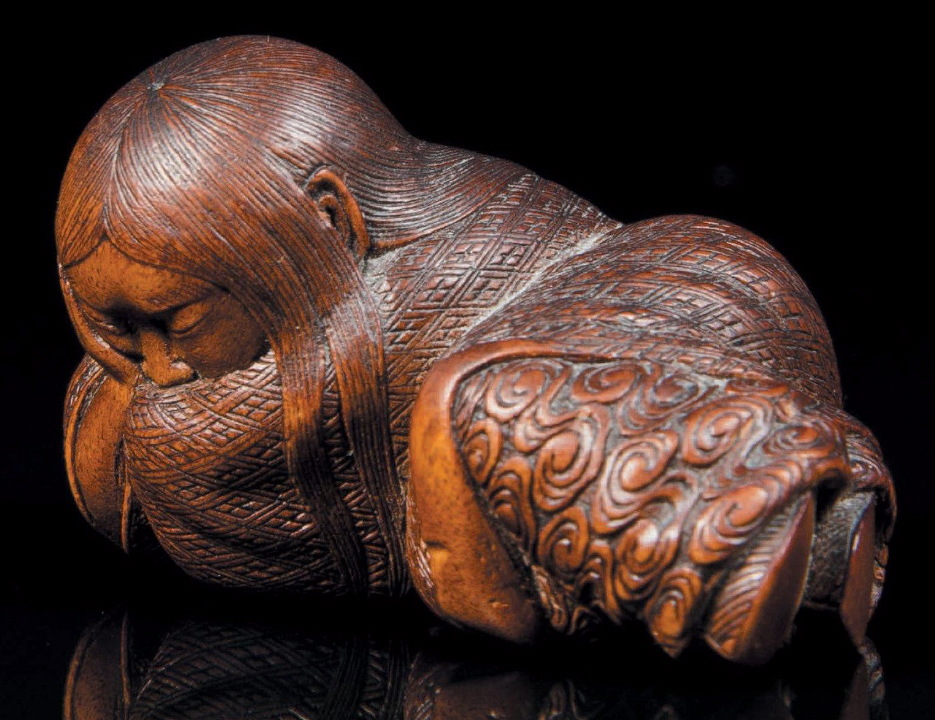
The many netsukes exposed nowadays auction houses are inherited from this taste for Japanese culture that was born in the late 19th century. All are not equal and it is important to ensure the authenticity of the object. The quality of the sculpture, condition and the subject can vary the price from £100 to more than £6,000. In 2005, a netsuke representing Shoki the giant fighting against demons was sold for over £100,000!
Anaïs Couteau
In collaboration with » More

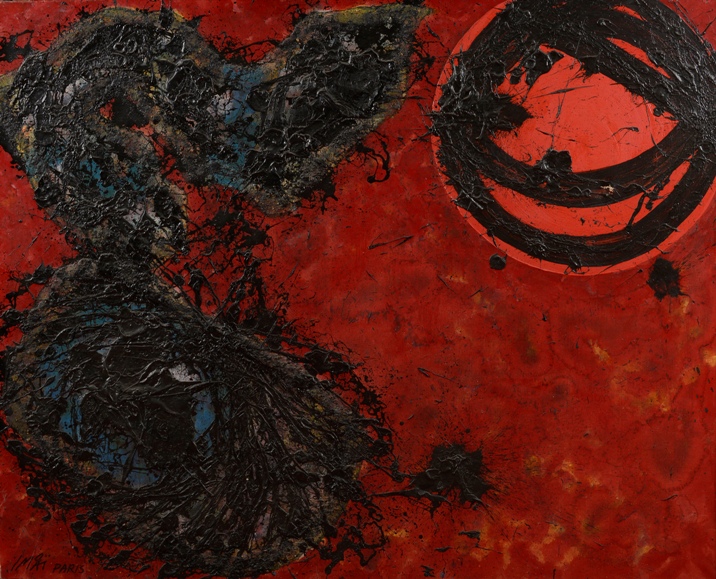 Saturday, April 11, Philocale auction house sold a collection of modern paintings and furniture and objets d'art with the collaboration of our specialists. The star of the day was undoubtedly the lot 147, an oil on canvas by Toshimitsu Imaï, sold for 81,000 Euros, hammer price.
Lot 147
Entitled "Soleil noir", our painting is signed and located in Paris. It was purchased by the seller to the Argos gallery in the 60s and measures 130 cm by 161 cm. Despite an accident and some uprisings, fans around the world were present whether by phone or internet for bidding. Estimated between 8,000 and 12,000 EUR, bid strated at 10,000 Euros with a tough battle up to 36 000. From there, two telephones came into competition with a final bid of 81,000 Euros, the world record for the Japanese artist Toshimitsu Imaï.
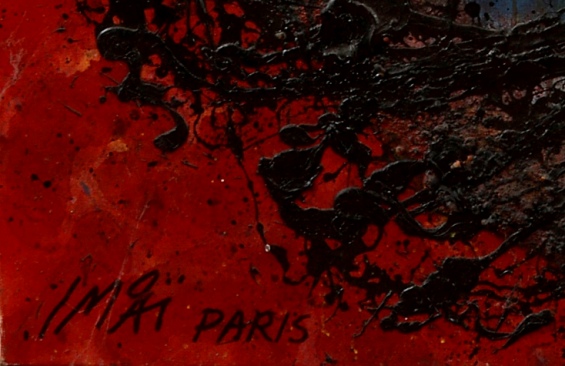 Toshimitsu Imaï
» More
Toshimitsu Imaï
» More
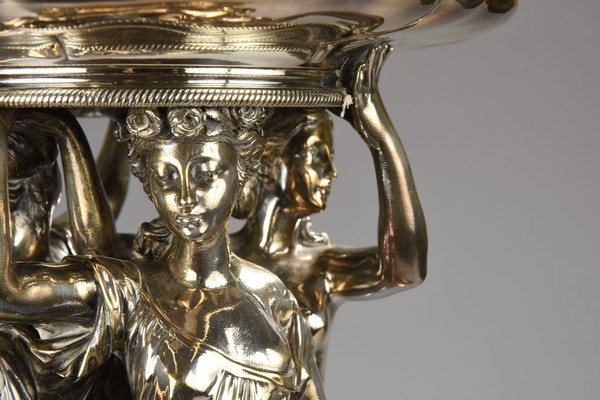 On Saturday 11th April, Philocale auctioneer in Orleans (France) will auction Orientalist and Modern paintings, antiques furniture and works of art and design. Discover the four coups de cœur of our specialists.
» More
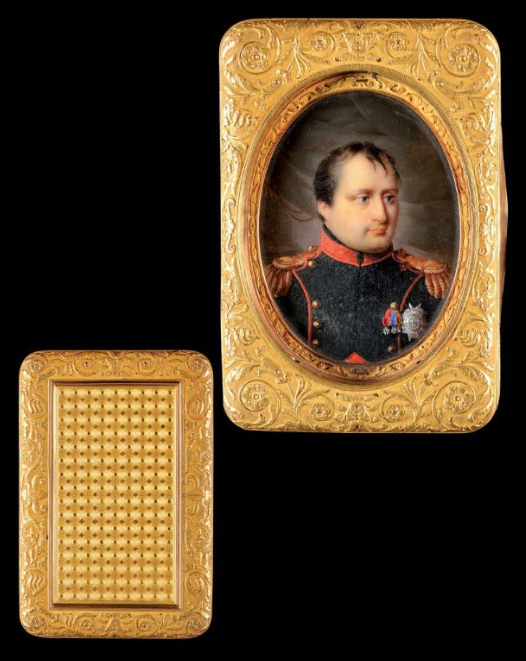 No man has known in modern history a similar glory than Napoleon 1st. Nearly 200 years after his death, the Emperor of the French still enjoys a passionate fan club. Any shirt or curl unleashed passions and drives up auction. Personal effects can snatch million at auctions. Back in an active market, international and very promising.
Driven by his art of war and conquering ambition, Napoleon Bonaparte became general at 24, master of the country at 30, emperor at 35 and almost master of the world at 40. Gifted with a certain art of staging, Napoleon gave his triumphs and failures epic dimension. The French politician best known abroad is now the record holder any market category of historical memories.
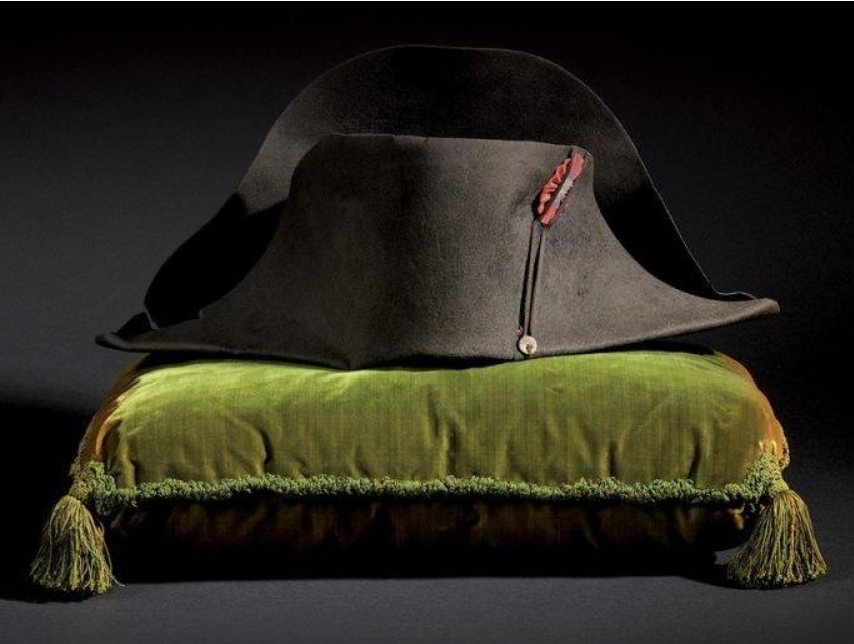
The man and the period fascinates: the market is its reflection. Cane, snuffbox, engagement ring or plate, the personal effects of the Emperor are today valuable relics that turn heads collectors. Last deed of arms, one of the legendary felt hats of the Emperor sold for € 1.5 million in November. This highly symbolic hat in the collective imagination has quintupled its estimate. The world record for a souvenir of the Emperor is held by the sword worn by Bonaparte First Consul at the Battle of Marengo sold in 2007 for € 4.8 million.
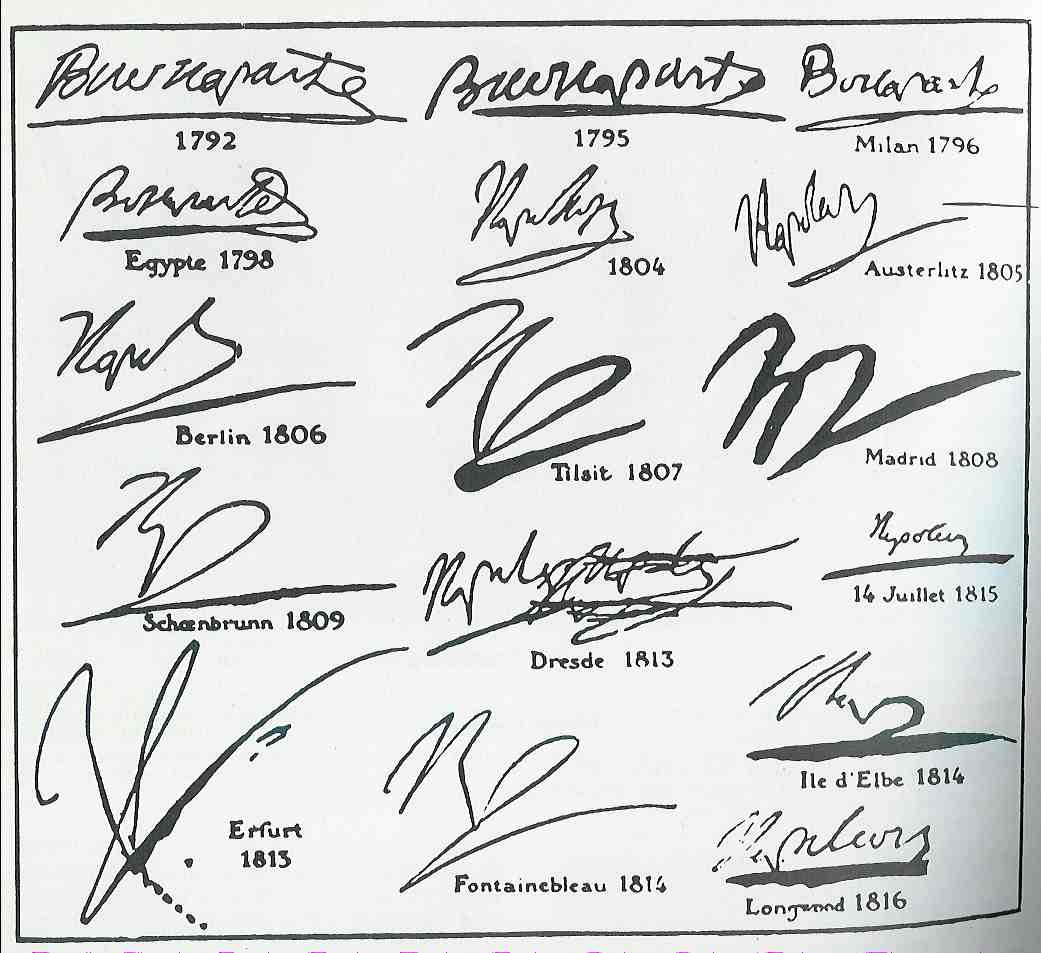
As an alternative to provide the 20 Bonaparte hats still in circulation, the history enthusiast can fall back on autographed documents of the Emperor. The letters signed by Napoleon are relatively numerous. They are accessible for approximately € 1,000 to € 1,500. Fully handwritten letters of Bonaparte are much rarer, the statesman used to dictate most of his writings. On the market they trade tens or even hundreds thousand Euros!
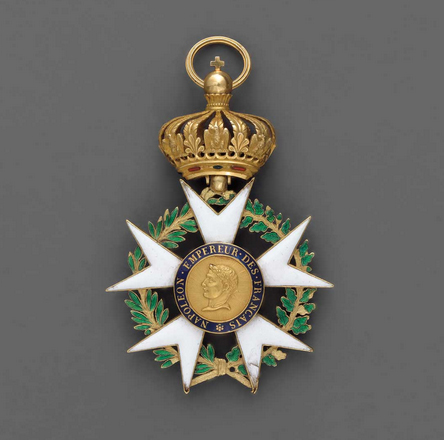
On the art market, Napoleon Bonaparte envelope his relatives of his aura as Aiglon his son or Josephine de Beauharnais his first wife and his troops whose equipment is also quite sought after and at more reasonable prices. Weapons, uniforms, medals or correspondence are particularly successful. The price varies depending on the grade of the military and rarity of the item. There are sometimes more unusual items like cannonballs from a battlefield, musical instruments or business card cases.
Napoleon and his memories have not stopped talking about them. This year marks the bicentennial of Waterloo and in 2021 the one of his death. This rich period will not fail to put a particular focus on Napoleon's reign of years and to attract the interest of collectors and even create new passions!
Anaïs Couteau
» More
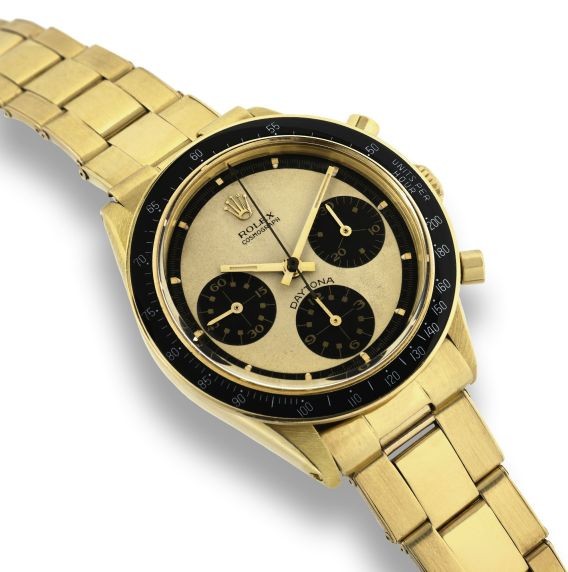 Rolex Daytona Paul Newman, the three ingredients of a watch are, it tells a story, it is the most famous watch and the most sought after in the world.
The Rolex Cosmograph Daytona: automotive passion and technological innovation
"Daytona" refers to the city of Florida, legendary for its hard sandy beach with a succession of car speed records between 1903 and 1935. The world-famous city continues later on the "Daytona International Speedway" circuit that partners with Rolex. 24 hours of Daytona, will become one of the most prestigious endurance race in the world, with the 24h of Le Mans
When the Rolex Cosmograph Daytona is first sold in the US in 1965, it was first thought for racing and racers: tachymeter scale for measuring speed, chronograph movement, colour contrast between the counters and the dial for easy reading in precarious conditions. The association with motor racing is an argument that particularly appealed to the American public.
 The Rolex Daytona Paul Newman: a watch, a man, a legend
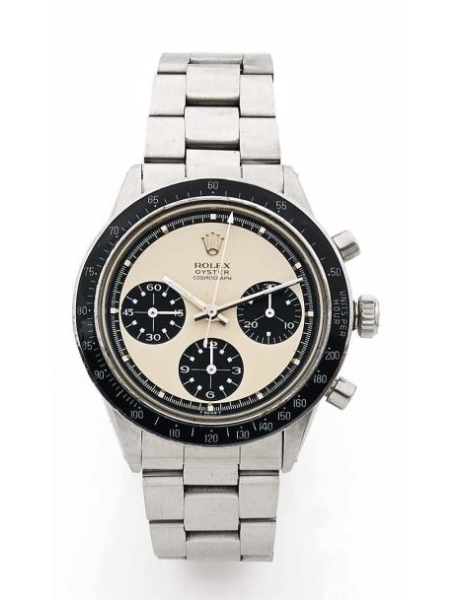
» More
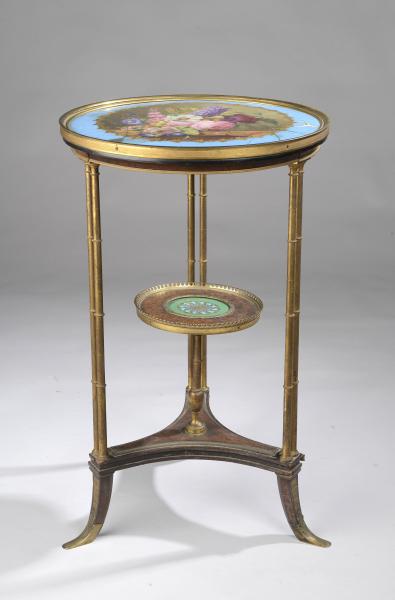 We will be pleased to meet you for the auction of Guillaume Le Floc'h auctioneer on Sunday, February 8th, 2015 at 14:30 in St. Cloud.
» More
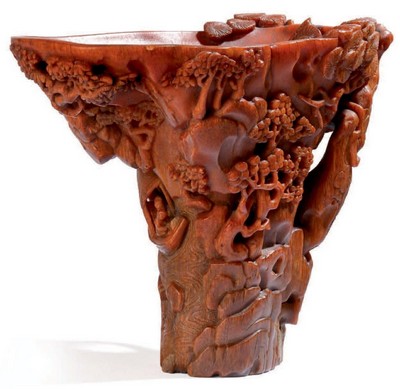 Rhino horn is a simple cluster of keratin, hair to make it simple! Yet, carved, especially in the form of cut, it turns heads and confirms the excellent health of Asian art market.
The rhino is the largest land mammal after the elephant and no known predators in the wild. For a hunter, it's one of the great trophies possible. In China, the Qing Dynasty (1644-1911), its delicate horns are cut, cored and sculpted. They then serve as supports for brushes, painter bucket, sleeves dagger or cups. Beverages such as tea are drank at ceremonies or spilled to the ground an offering sign. These libation cups, attribute of scholar, are an important sign of social prestige.
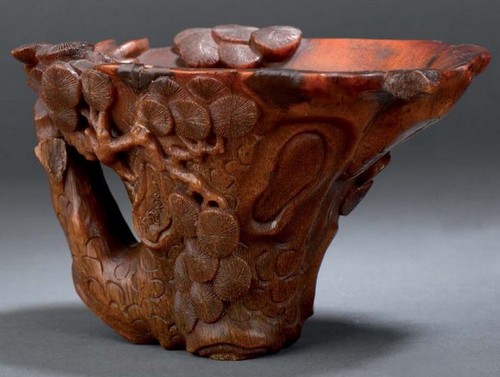
The material of these cups as the carved patterns are an evocation of nature related to Taoism. Lotus leaves, plants or animals mingling phoenix, or small figures in a landscape reminiscent to Man eternity of nature.
In China these cups no bigger than a mug, become so popular that they are copied in white porcelain and gradually become decorative. They are produced until the 19th century.
At the heritage value of these cups, is added that of their raw material: rhino horn. Powdered, Chinese medicine lends many virtues she would care for malaria, epilepsy, rheumatism or cancer and is even aphrodisiac. The rhino is now threatened with extinction. This scarcity makes its horn more precious, much more than the caviar and gold: rhino horn reaches €70, 000 kg, more than double the yellow metal. This "rhinomania" pushes zoos and reserves makers to cut their own horns mammals to prevent poaching. Trade horn - even old - is extremely controlled.
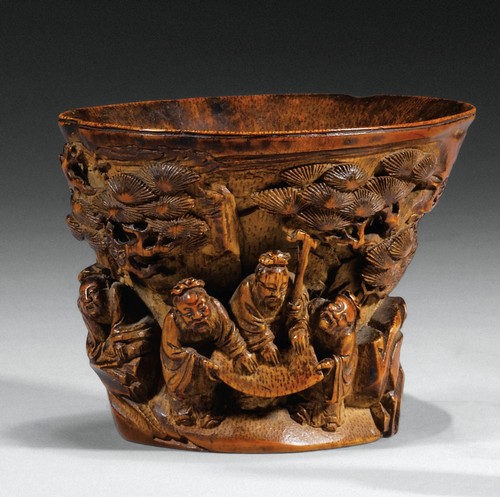
The soaring prices of the horn, rarity, even its possible disappearance, participate in the pricing of these old cups.
France is an important source of ancient Chinese art. The taste for these "curiosities" is initiated in the 17th century at the royal favour particular embassies in China. From the 19th century, wealthy travellers are at the initiative of fabulous collections. Today, the strong economic growth in China by extension benefits the art market. An anteriority French collection attracts many Chinese collectors eager to reclaim their heritage. Rhino horn cups today generate lust, and regularly see their estimation fly in auction and sometimes reach several hundred thousand Euros.
So look in your attic, your cupboards because who knows if a distant ancestor has not brought any of these valuable objects of a journey!
Anaïs Couteau
This article is published in collaboration with:
» More
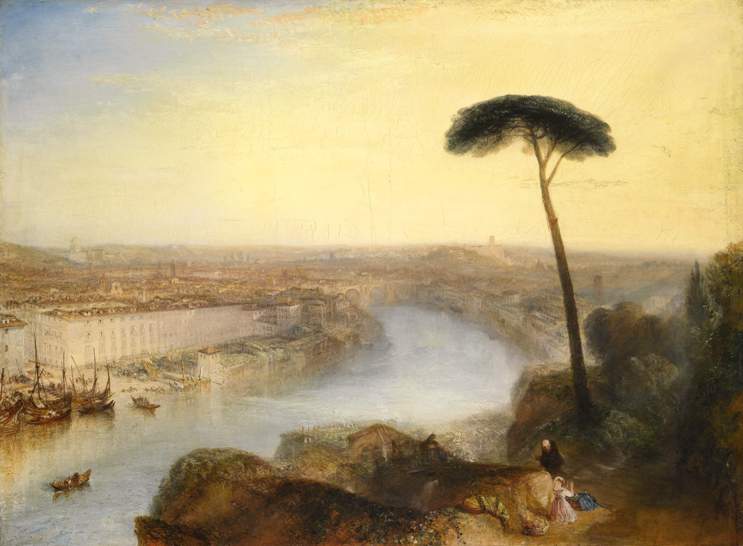 If today New York is the capital of the auctions of modern and contemporary paintings, London remains the temple of Old Masters painting as just illustrate by the auction house Sotheby's at its vacation on 3 December which saw an oil on canvas by Turner sold for £30,3 million with an estimated 15 to 20 million pounds.
Roma from Mount Aventine
Our oil painting was commissioned from William Turner (1775-1851) by one of its patrons, Hugh Munro of Novar in 1828 and asked for 7 years of work to the artist. The picture was painted in 1835 and exhibited in 1836 at the Royal Academy where it was regarded then as the most beautiful painting of Turner and the most beautiful view of Rome.
In 1878, our painting sold for record sum at the time of £6.142, to the fifth Earl of Rosebery, and then was passed by descent to the present.
Never restored on its original canvas, our oil is in a conservation status quite exceptional, according to Sotheby's, Turner brush hairs are still present.
Our painting is part of the ten major works by Turner still in private hands, which explains the appetite of bidders who doubled the estimate of the auction house.
Turner
Joseph William Turner (1775-1851) was an English painter of the Romantic period. He specialized in landscape paintings and history painting. It is often called "the painter of light" and is often considered as the precursor of Impressionism. It was also a great watercolorist.
The Earl de Rosebery and Mentmore Towers
Our painting was preserved until the mid-70s to Mentmore Towers castle built for the Baron Mayer de Rothschild, whose only daughter brought the fabulous collections of the castle to the fifth Earl of Rosebery, who was later Prime Minister of Great Britain. Aficionados of auctions know Mentmore following the sale of a large part of the collections of ancient paintings, French royal furniture, sculptures, silver and porcelain preceding the sale of Mentmore to pay inheritance tax.
It faced then with another work by Turner now in the Getty Museum. Since the 80sit was on loan to the National Gallery of Scotland.
Legendary work with a perfect history, the price of our painting may seem astronomical, but it is justified in terms of its quality and the importance of Turner. » More
|